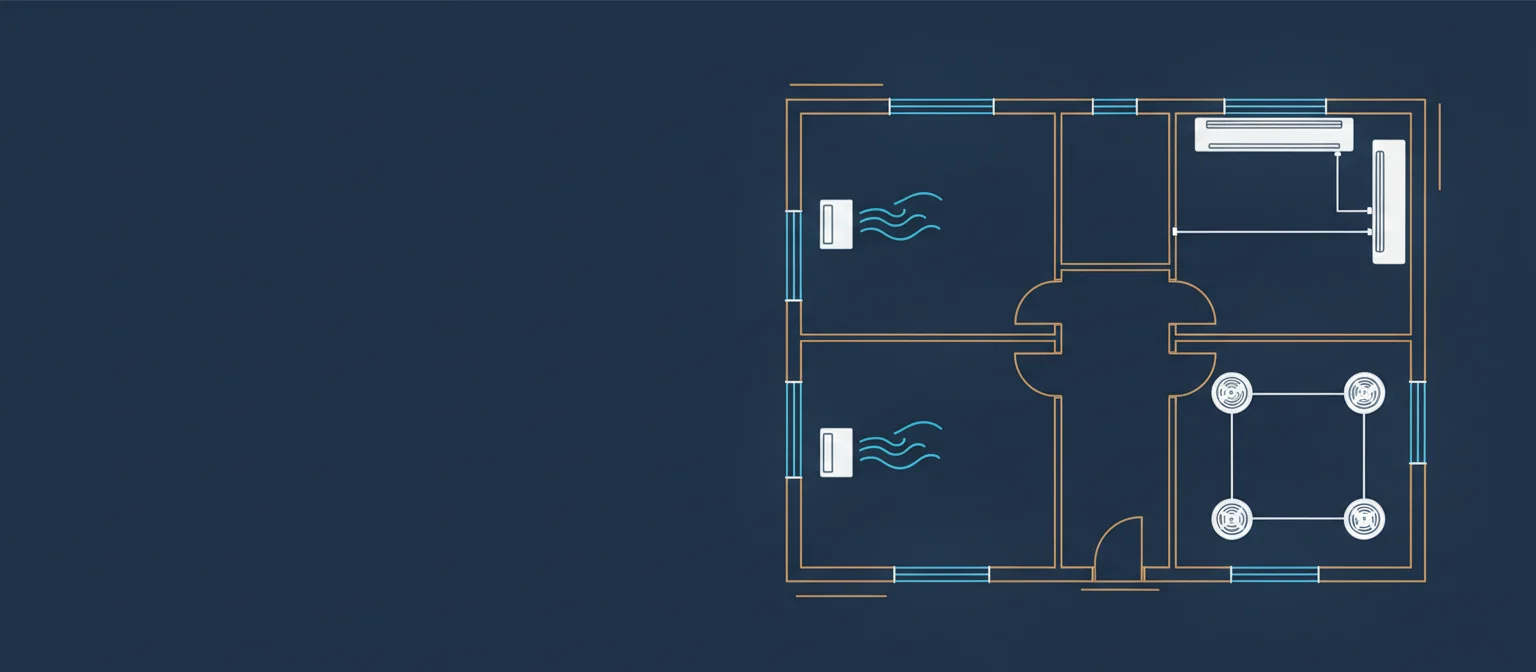
You'll often hear it comes down to split or ducted, but there are six types of air conditioners for a home. Here's where each one goes and who it suits.
Split or ducted? There are six types of air conditioners for a home
You'll often hear that it comes down to split or ducted. Those are the two most common types of air conditioners, and together they make up 91% of the models in our catalogue. But there are four more, and one of them may suit your house better.
Here are all six.
| Type | Where it goes | Who it suits |
|---|---|---|
| Split system | high on a wall | one room |
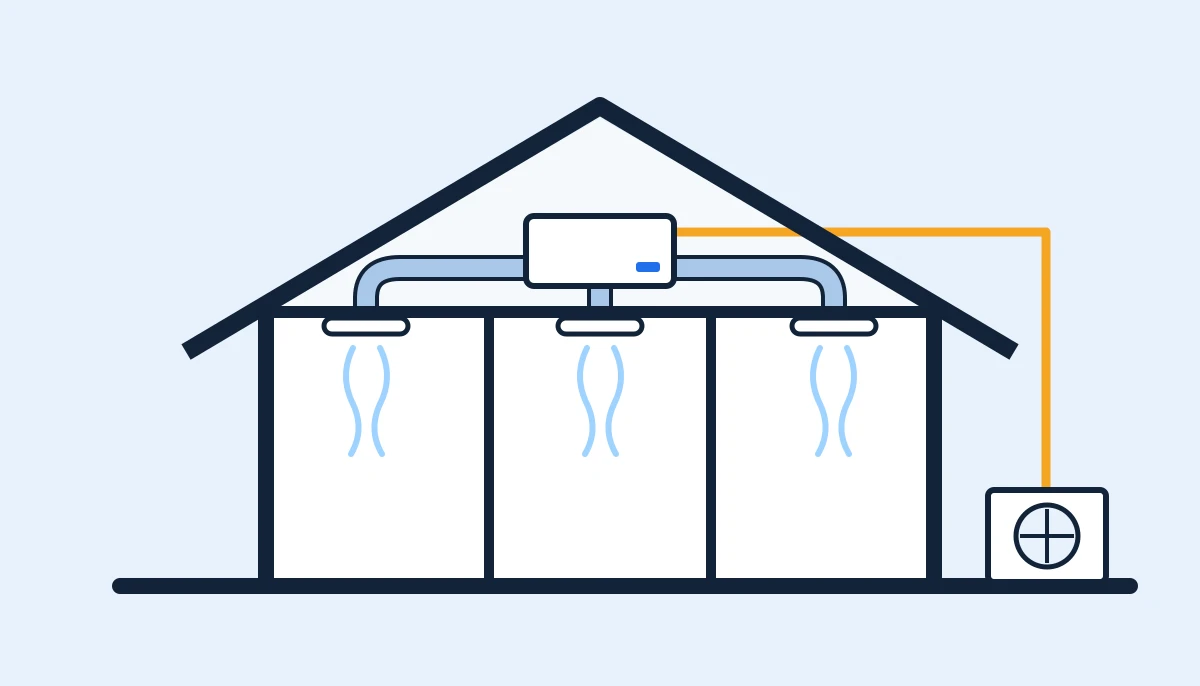
| Ducted | in the ceiling, with a vent in each room | the whole house |
| Multi head split | several indoor units, one outdoor unit | two to five rooms |
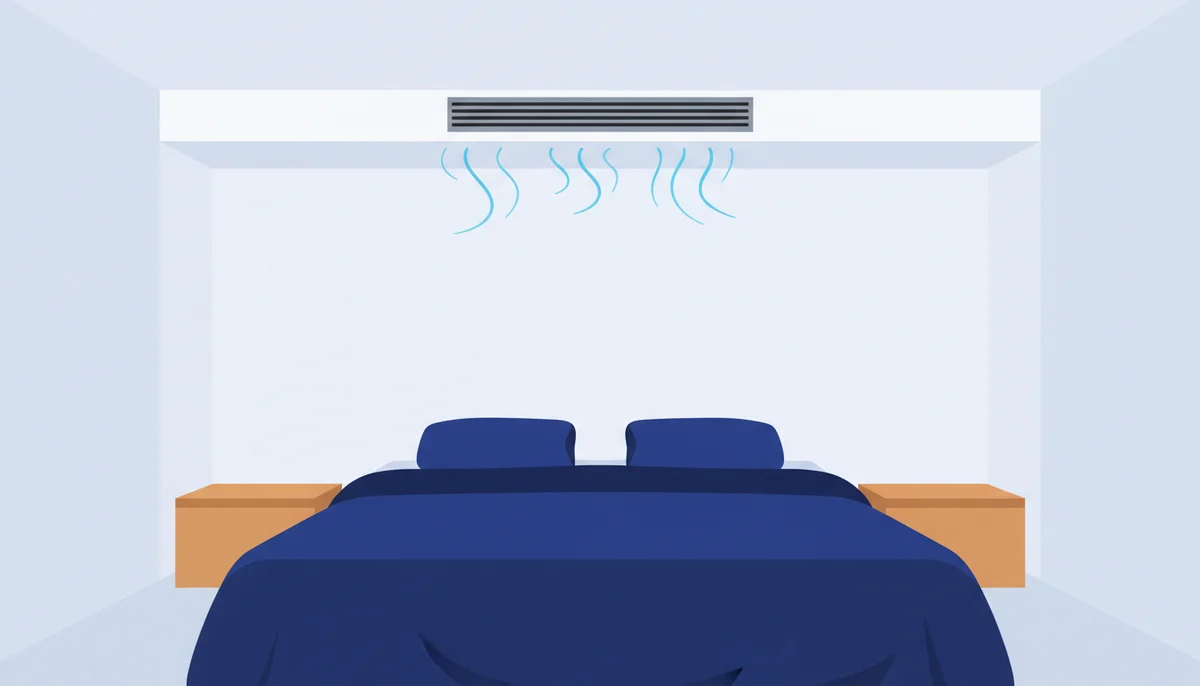
| Bulkhead | in the ceiling, only the grilles show | a room where you don't want to see a unit |
| Cassette | set into the ceiling | a room with no spare wall |
| Floor console | low down, near the floor | an old heater spot, or under a window |
Portable, window and evaporative units aren't in our catalogue, so they're not in this guide.
What changes is where the indoor unit sits
All six work the same basic way. One unit sits outside, another sits inside, and refrigerant pipes run between them.
So you're not really choosing between six different machines. You're choosing where the indoor part goes, and how many rooms it has to reach.
Split system: one room, one unit
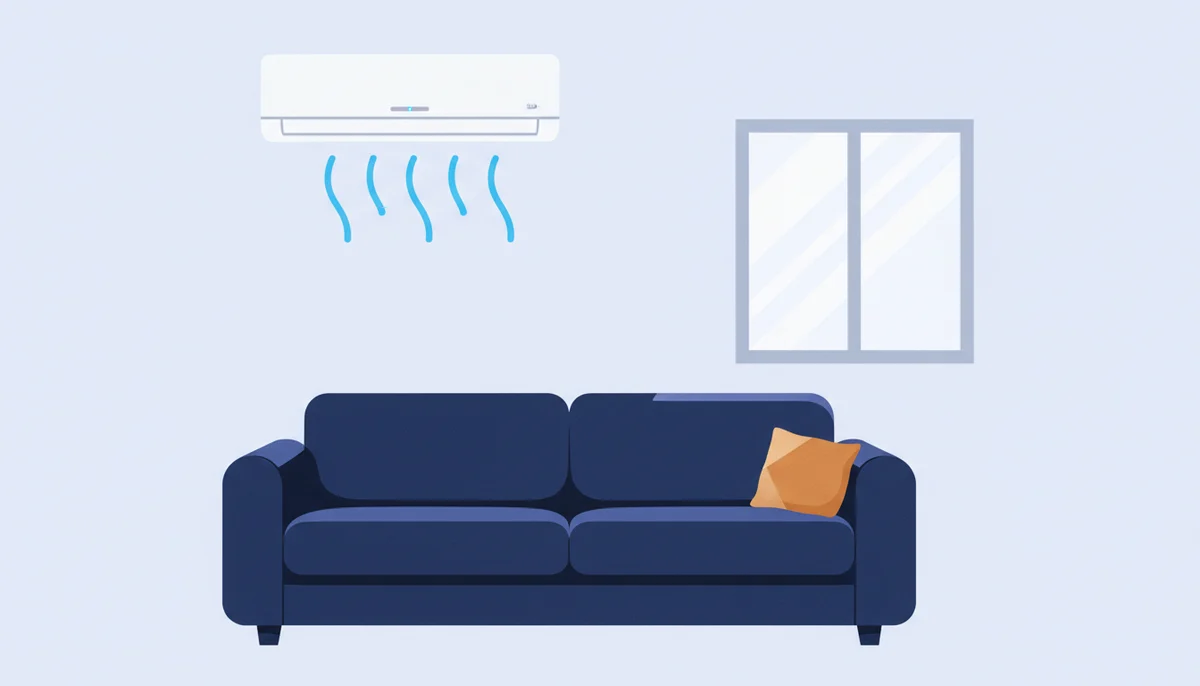
This is the one you've seen in most houses: a unit high on the wall and a box outside. Mitsubishi Electric's brochure calls its split systems "ideal for small to medium room sizes".
It suits a bedroom, a study or a living room. If you want three rooms done this way, that's three units on the walls and three outdoor units to find a spot for.
Multi head split: several rooms, one outdoor unit
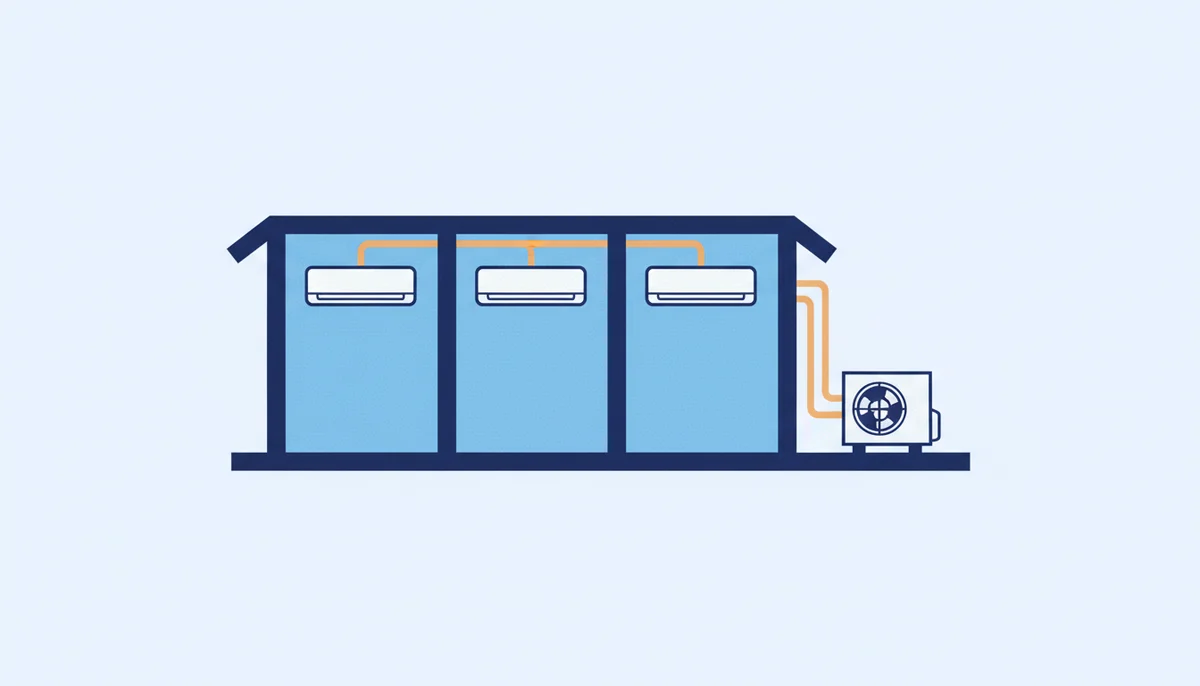
A multi head split system runs several indoor units from one outdoor unit. How many depends on the outdoor unit. These are Panasonic's figures:
| Outdoor unit | Indoor units, up to |
|---|---|
| 5.2 kW | 2 |
| 5.4 kW | 3 |
| 7.1 kW | 4 |
| 8 kW | 4 |
| 10 kW | 5 |
Panasonic's sheet lists wall, mini cassette, slim ducted and floor console units for these systems. So "multi" tells you how many rooms it reaches, not what it looks like.
It suits two to five rooms in a house with room for only one outdoor unit, or with no roof space for ducted.
Cassette: in the ceiling, off the walls
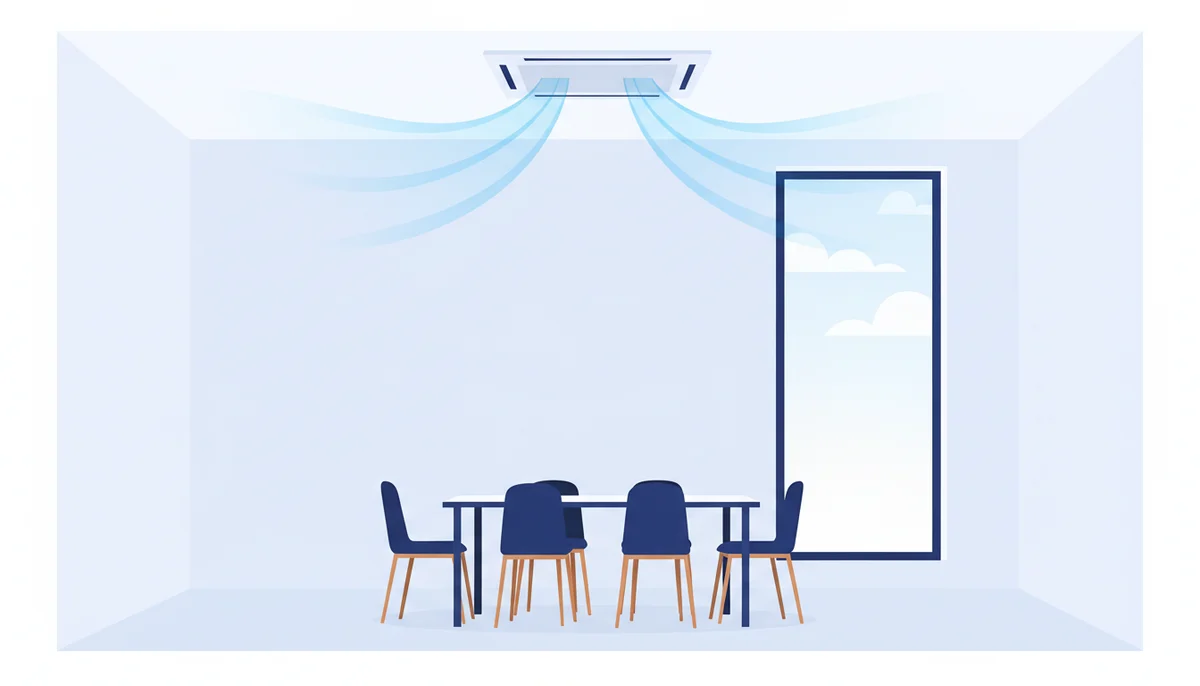
A cassette is set into the ceiling, and the panel you see sits flat against it. Mitsubishi Electric says its SLZ-M lets you keep your wall and floor space free, and it sends air out four ways.
It does need depth above the ceiling. The SLZ-M is 245 mm high. The slimmer MLZ-KP is 185 mm high, made for low ceiling cavities.
It suits a room where the walls are taken up by windows or cupboards.
Floor console: low down, where a heater used to be
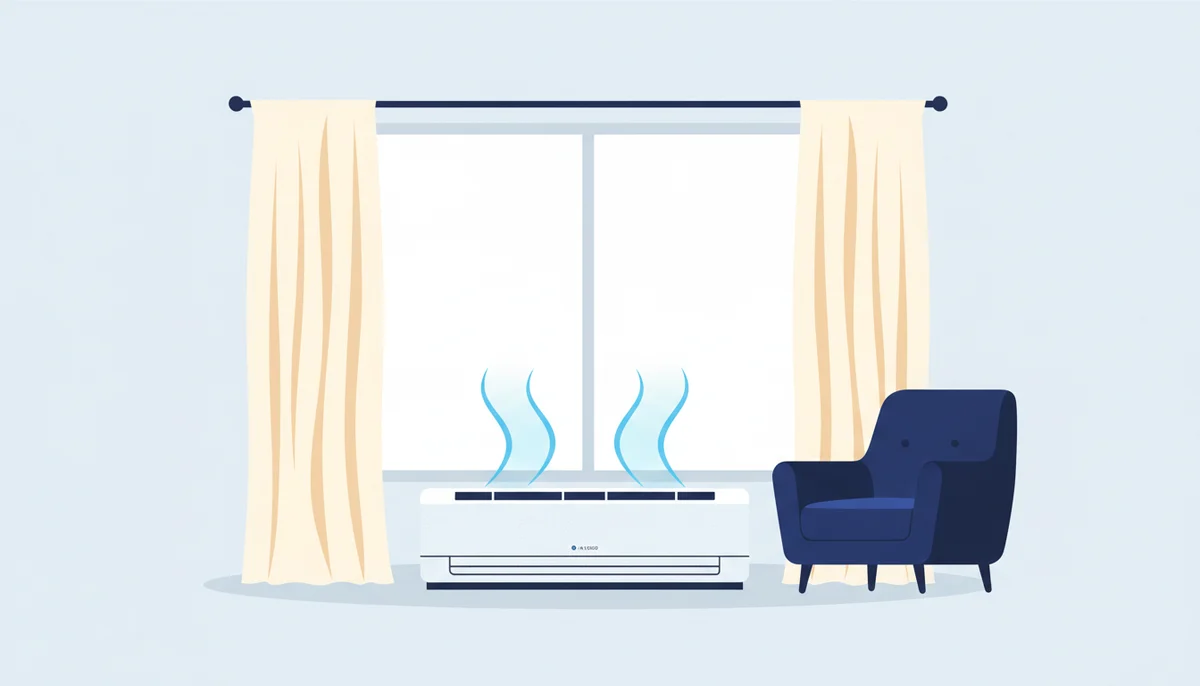
A floor console sits low, close to the floor. Mitsubishi Electric calls its MFZ-KW a great renovation option, because it fits into the cavity left by an old fireplace or heater. Set into the wall, it drops from 215 mm deep to 145 mm.
Mitsubishi Heavy Industries suggests the same idea under a window, for when wall space is short.
It suits a room with no good spot up high.
The sizes each type comes in
Size here means cooling power, measured in kilowatts (kW). Ducted is the only type in our catalogue that goes past 10 kW.
| Type | Smallest | Largest |
|---|---|---|
| Split system | 1.5 kW | 10 kW |
| Ducted | 3.6 kW | 25 kW |
| Multi head split | 5.2 kW | 10 kW |
| Bulkhead | 2.5 kW | 7.1 kW |
| Cassette | 2.5 kW | 9.5 kW |
| Floor console | 2.5 kW | 6.1 kW |
These are the sizes in the model names, and the tested figure can sit a little lower. Daikin's two 25 kW ducted models test at 24 kW and 23.5 kW. For a multi head split, the figure is the outdoor unit, and that gets shared between the rooms.
To work out the size your room needs, use our room size guide.
Three questions that narrow it down
- How many rooms do you want cool at the same time?
- Where could the indoor unit go: a high wall, the ceiling or down low?
- Is there a spot outside for one outdoor unit, or for several?
Your house often answers these for you. Send a few photos through our quote form and we'll work out which types fit. Sometimes that takes a visit.
Sources
- Mitsubishi Electric Split Systems brochure 2025: wall, bulkhead, cassette and floor console units
- Daikin Ducted brochure: the parts of a ducted system, zones, where R32 indoor units can go
- Panasonic multi split specifications: outdoor sizes, indoor units per outdoor unit, indoor unit types
- Mitsubishi Heavy Industries split systems brochure: Akari bulkhead and Wera floor units
- Our catalogue under system types, 31 October 2026: share of models and the size of each type