Single phase reaches 16 to 18 kW in every ducted range we install, and 20 kW and up is three phase in every one we hold a document for. Of our 135 ducted models, 106 are under 17 kW. Here is where each range switches over, what the current tables say, and what an upgrade involves.
One conductor or three: what single and three phase mean
A single-phase supply brings one live conductor into the house at 230 volts, and every appliance shares it. A three-phase supply brings three, and a three-phase air conditioner spreads its draw across all of them, so each conductor carries about a third of the current.
The unit itself is the same: the same kilowatts of cooling, the same power input, the same running cost. Only the wiring changes.
The manufacturers' own tables show the split. Mitsubishi Electric's 14 kW PEA-M140 ducted unit draws a rated 18.3 amps in cooling on its single-phase outdoor unit and 6.8 amps per phase on the three-phase one, with a maximum of 32.2 amps against 15.2.
Panasonic's 12.5 kW high-static ducted draws 16.7 amps single phase and 5.6 amps three phase, from the same 3.5 kW of input power. That is why phase matters at the switchboard and nowhere else in the house.
Where the ranges we install switch over
Every ducted range we install runs on single phase well past the size most Sydney homes need, and every one we hold a document for is three phase only from 20 kW. In between, most offer both.
| Range | Single phase | Three phase |
|---|---|---|
| Carrier QSH and QSM | 5.3 to 17 kW (the 17 kW QSH lists 31 A maximum) | none |
| Rinnai D Series | 7 to 18 kW (the 18 kW draws 22 A rated) | 20 and 24 kW |
| Mitsubishi Electric Mr Slim | 5 to 18 kW (either form from 10 kW) | 10 to 24.5 kW; the only form at 20 and 24.5 |
| Daikin Premium Inverter | 7.1 to 18 kW | 18 to 25 kW |
| Daikin Inverter | 5 to 16 kW | from 7.1 kW; the only form above 16 |
| Panasonic Premium Inverter | 6 to 14 kW | 10, 12.5 and 14 kW |
| Fujitsu High Static | 7.1 to 15.5 kW (16 kW in the high-performance version) | 10 to 15.5 kW |
| ActronAir CRV210T | none | 19.4 kW |
Mitsubishi Electric calls its 18 kW "one of the largest ducted units available in the market with a single-phase power supply".
So the boundary is not a number, it is a pattern: single phase reaches 16 to 18 kW in every range, three-phase options begin around 10 kW, and 20 kW and up is three phase.
How big a system actually needs it
The 130 ducted models by band (catalogue, October 2026)
| Capacity | Models | Phase, per the manufacturers' documents |
|---|---|---|
| under 10 kW | 43 | single phase in every range |
| 10 to 16.9 kW | 61 | single phase in every range, three-phase versions in most |
| 17 to 18.9 kW | 8 | depends on the range |
| 19 kW and up | 18 | three phase in every range we hold a document for |
Of the 130 ducted systems in our catalogue:
- 104 are under 17 kW, single-phase territory in every range above
- 8 sit between 17 and 18.9 kW, where Carrier, Rinnai, Mitsubishi Electric and Daikin's Premium Inverter still offer single phase and Daikin's standard Inverter does not
- 18 are 19 kW or larger
So the question is not "do I want three phase" but "how many kilowatts does the house need", and the calculator answers that from six questions. A typical two-storey home lands in the 10 to 16 kW band, where 61 of our 130 ducted models sit and every range has a single-phase unit.
The rated current shows why the boundary sits where it does.
A single-phase unit at 17 or 18 kW is already pulling 22 to 31 amps at full load through one conductor, and everything else in the house shares it: Endeavour Energy's connection policy defines a basic urban connection as a load under 100 amps single phase or 63 amps three phase.
The ducted cost guide covers the other things that move a ducted quote.
What an upgrade involves
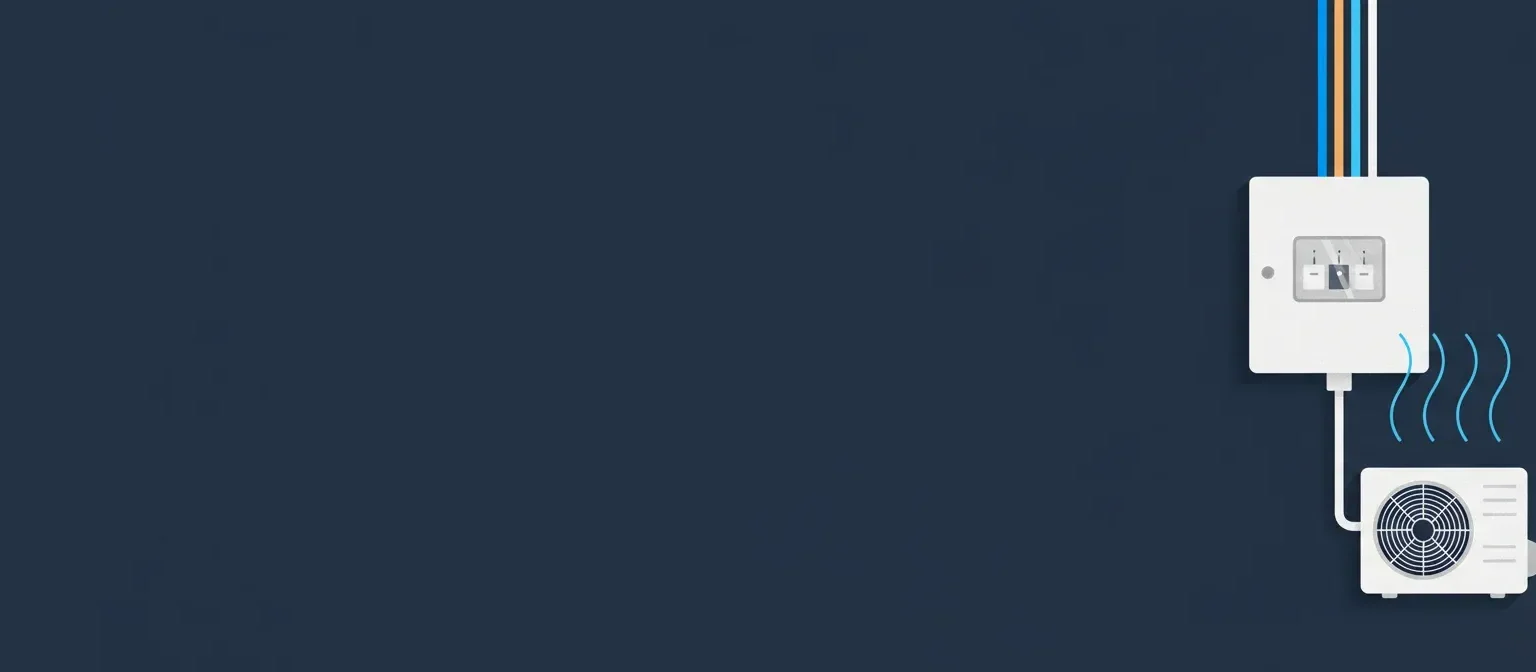
If the house needs a 20 kW-plus system and the switchboard is single phase, the upgrade is electrical work on the network's side of the meter as well as yours, and it is not something an air conditioning installer does.
In NSW the service line and the connection point are "contestable network services" under the Electricity Supply Act, and the scheme rules restrict them to a Level 2 Accredited Service Provider, an electrician accredited by the state and authorised by the local distributor.
The application goes to the distributor: Endeavour Energy's connections portal asks for the expected load and whether the supply should be single phase or three phase, and Ausgrid runs the same process through its connections section. The switchboard usually changes with it, to take a three-pole main switch and the new circuits.
That quote comes from the Level 2 electrician, separately from the air conditioning quote, and the timing matters: the supply has to be in before the outdoor unit can be connected. It is also why the switchboard is the first thing we look at in a quote photo, before any range is on the table.
Already on three phase: which version to buy
A three-phase board still has single-phase circuits, so any unit in our range can go on it.
Where a range offers both versions at the same capacity, the three-phase one draws a third of the current per conductor (Mitsubishi Electric's 18 kW: 22.2 amps single phase against 5.5 per phase), which means a lighter cable and breaker to the outdoor unit and a load that sits evenly across the three phases instead of loading one.
The capacity, the star rating and the annual energy figure are the same either way, so the choice does not change the running cost; what a star is worth is the same sum whichever version you pick.
Wall splits are a simpler story: every split system we install is single phase, up to the 10 kW Daikin Skywall, so phase only enters the conversation for ducted.
How to tell what you have
Open the switchboard door. A three-phase board has a wide main switch with three poles ganged together; a single-phase board has a single-pole main switch.
If you are not sure, a photo of the board with the door open is enough for us to read it, and the switchboard is one of the photos the quote form asks for anyway.
Send those and the phase question answers itself before you have to think about it.
Sources
- Carrier Ducted Systems brochure, Daikin Ducted brochure, Mitsubishi Electric Mr Slim brochure 2025 with the Large Capacity and PEA ducted flyers, and the Panasonic residential catalogue 2023, all on our manuals and brochures page: the phase, power supply and rated current tables quoted above
- Rinnai ducted air conditioning brochure: 7 to 18 kW single phase, 20 and 24 kW three phase, rated input currents
- Fujitsu General installation quick reference for the ARTH and AOTH ducted range and the High Static three phase range page: single phase 220 to 240 V and three phase 380 to 415 V outdoor units, the 10 to 15.5 kW three-phase models
- ActronAir CRV210T / EVV210S technical selection data: 19.40 kW, three phase, 400 V outdoor supply
- Endeavour Energy Connection Policy 2024 to 2029 and Start a connection: the basic connection thresholds and what the application asks for
- NSW Accredited Service Provider Scheme Rules, December 2017 and the ASP scheme page: contestable network services and Level 2 accreditation
- Ausgrid connections: modifying an existing connection
- Our catalogue under ducted systems: 130 ducted models by capacity, 26 September 2026