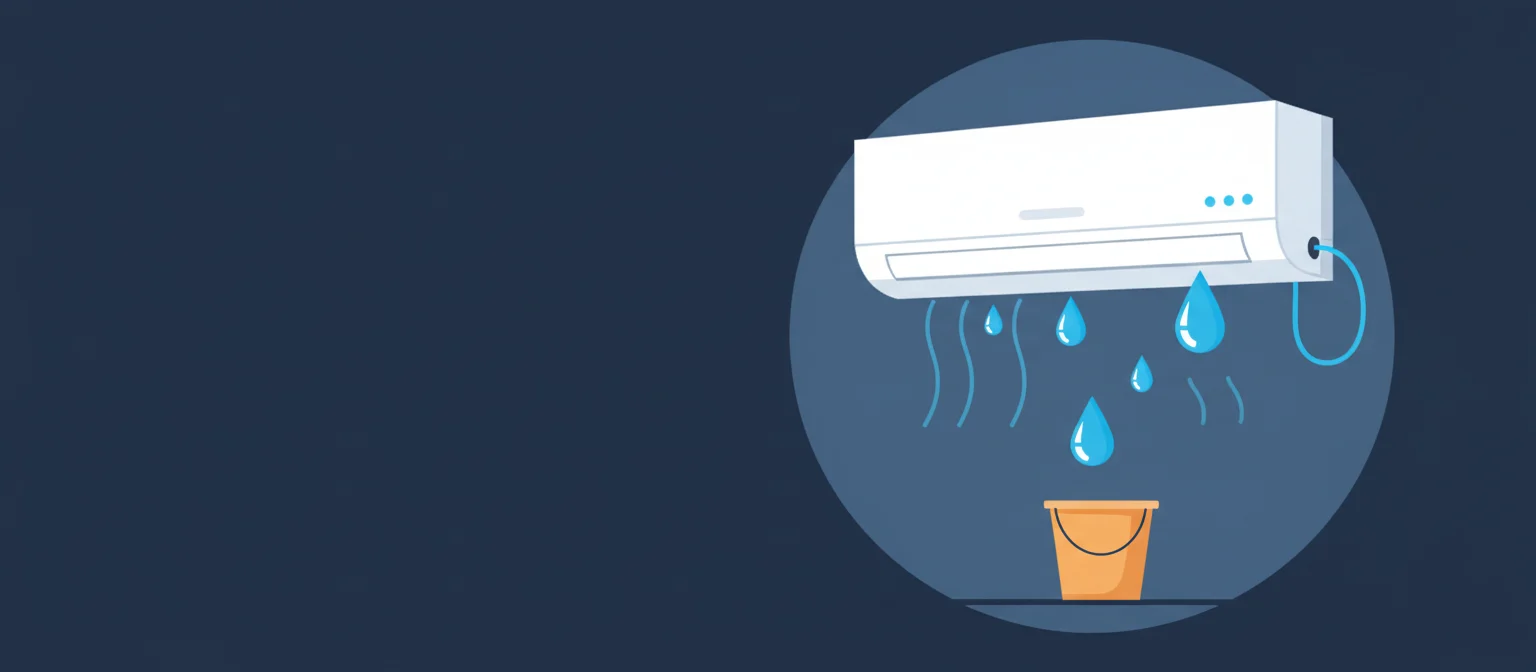
Water dripping from the indoor unit is the water your air con pulls out of the air. It has stopped draining away. Switch it off, then check the filters and the drain hose outside. Here's what the manuals say to check first, and when to call us.
Where the water comes from
An air conditioner on cool is a dehumidifier as much as a cooler. Room air passes over a coil cold enough for the moisture in it to condense, the way a cold glass sweats, and that water collects in a tray under the coil and runs out through a drain hose.
On a muggy Sydney afternoon that is a steady trickle: the Bureau's Richmond station averages 47 percent humidity at 3pm in summer, and the coast is stickier still.
So water dripping from the front of the indoor unit does not mean the unit is broken. It means the water it made has stopped going where it should.
That is a drain problem, a tray problem or, less often, a refrigerant problem, and a technician checks them in that order because the first is common and usually a quick fix.
Three things to check before you call
The manufacturers' own manuals, which we keep on our manuals and brochures page, agree on the first checks. Mitsubishi Electric's MSZ-EF user manual lists two: is the front panel closed properly, and does water flow freely from the end of the drain hose outside?
Panasonic's Z Series operating instructions add that the drain pipe must be connected, kept clear of gutters and containers, and not sitting in water, because a hose end under water cannot drain.
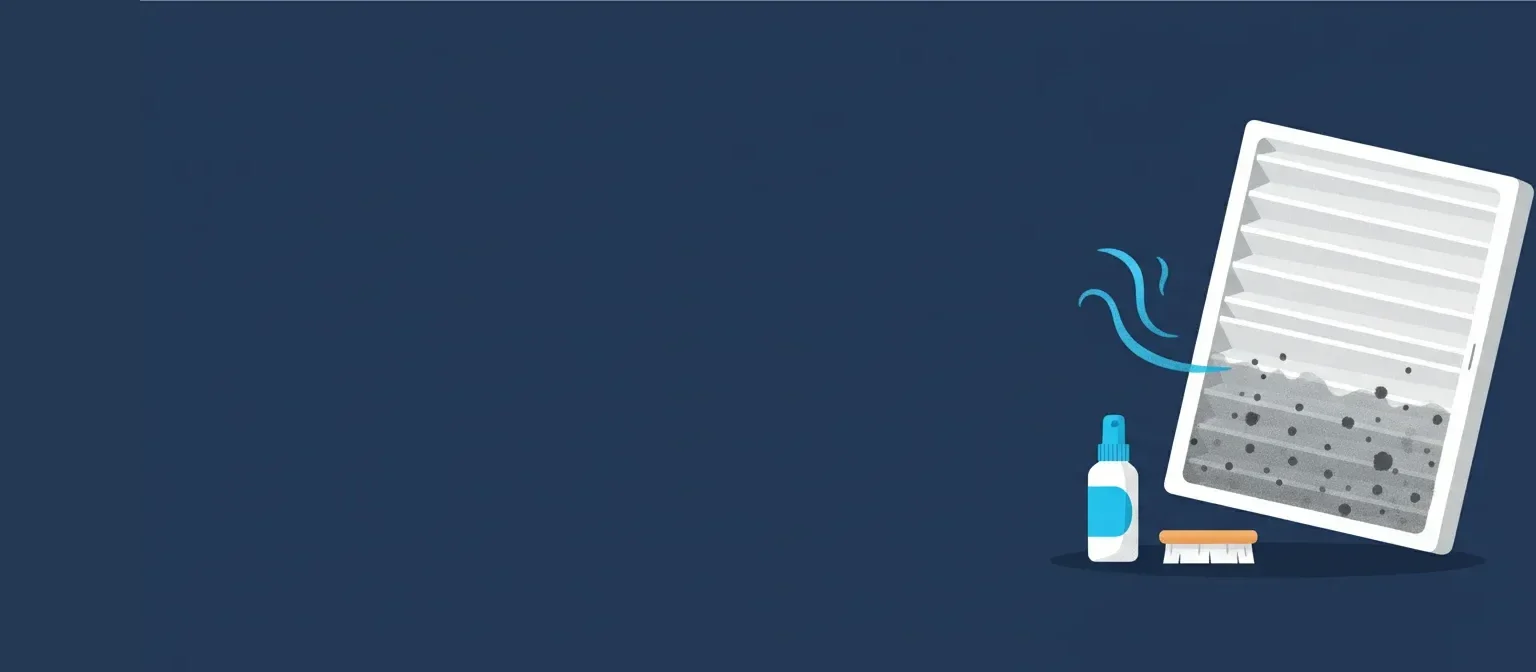
The third check is the filters. Mitsubishi Electric's MSZ-AP manual is blunt about it: dirt and dust in the unit can clog the drain passage. Slide the filters out, rinse them, let them dry in the shade and put them back. If the dripping stops, that was the cause.
If it does not, both brands say the same thing: stop using the unit and call.
Water leaking from the indoor unit is on the "contact your dealer immediately" list in the Panasonic manual and the "stop using the air conditioner" list in the Mitsubishi Electric one. Running it wet risks the electronics behind the coil and the plaster below it.
Cause one: a blocked condensate drain
The drain hose is a narrow tube that carries slightly dirty water through a warm wall cavity, which is ideal for the slime that grows in it. Over a summer the film thickens, dust from a dirty filter adds to it, and one day the tray fills faster than the hose can empty it.
On our repairs page the entry reads "water dripping inside: blocked condensate drain or a full tray", and the fix is listed as clear the drain, check the fall on the line, run it and watch it.
The last step matters. A drain that has been cleared but not watched can refill in twenty minutes if the real problem was never the blockage. That is why we run the system on cool after clearing and watch the hose end outside until the water is flowing, rather than packing up when the tray is empty.
Cause two: the fall on the line, and a full tray
Condensate drains by gravity, so the hose has to go downhill the whole way.
Mitsubishi Electric's PEAD ducted installation manual sets the number: a downward pitch of 1 in 100 or more, which is 10 mm of fall for every metre of run, and it warns that if the unit is hung with the drain side higher, water leakage may result.
The same manual tells the installer to install the unit in a horizontal position, because a tray that tilts the wrong way holds water instead of shedding it.
On a wall-mounted split system the rule is the same and the failure is usually a sag: a hose looped through the wall or dropped into a bend traps a pocket of water, air locks behind it, and the tray backs up.
On a ducted system the tray sits in the roof space, and several ranges pair it with a built-in condensate pump to lift the water out.
When the pump fails the tray fills and the first sign is a stain on the ceiling under the unit, often nowhere near a grille. This is also where a duct joint sweating in a hot roof can look like a leak: the fix is insulation, not plumbing.
Cause three: a coil that froze
The third cause is the one that surprises people. If the coil gets too cold, the moisture on it freezes instead of dripping. The unit blows weak, slightly warm air while the ice builds, then the ice thaws when the system stops and dumps more water at once than the tray was ever meant to hold.
Two things make a coil freeze: airflow starved by a clogged filter, which is back to the first check, or a refrigerant charge that has dropped.
A sealed system does not use up refrigerant, so a low charge means a leak somewhere in the pipework, and topping it up without finding the leak sells you the same repair again next summer.
We pressure test, trace the leak and quote before anything is fitted. On an older unit running R22 refrigerant a leak is one of the cases where we will quote a replacement alongside the repair, because the gas and the parts are no longer easy to get.
Water outside is usually fine
Dripping from the outdoor unit is normal more often than not. In cool and dry modes the pipes and their connections get cold enough to condense water out of the air, and in heating the outdoor coil is the cold side, so it drips as it defrosts.
Mitsubishi Electric's MSZ-EF manual and Panasonic's Z Series instructions both list this under "not a fault".
Two outdoor signs are worth a call. Water running down the wall from the pipe run, which points to a gap in the pipe insulation, and a puddle that appears when the unit is off and the weather is dry, which is not condensate.
What a repair visit covers
Tell us whether it is a split or a ducted system when you book, because they are not the same job: on a split everything is reachable from the wall, on a ducted the tray, the pump and the drain run are in the roof.
The diagnosis fee is quoted before we book, the repair is a fixed price you approve before work starts. Standard repairs are booked within a few business days; if water is coming through a ceiling, our 24/7 emergency repairs service jumps the queue.
Once it is fixed, a yearly maintenance visit that clears the drain and cleans the coil is what keeps it fixed, and if the tray and coil have gone black, a deep clean deals with the slime the drain hose grew from.
Sources
- Mitsubishi Electric MSZ-EF Series user manual: the front panel and drain hose checks, the stop-and-consult list, and outdoor dripping in cool, dry and heating modes
- Mitsubishi Electric MSZ-AP Series operating manual: dust clogging the drain passage, and drain water damaging what sits under the unit
- Mitsubishi Electric PEAD-M ducted installation manual: the 1 in 100 drain pitch and hanging the unit level
- Panasonic Z Series operating instructions: drain pipe kept clear of gutters, containers and standing water; water leaking indoors as a contact-your-dealer condition
- Bureau of Meteorology climate averages, Richmond RAAF station 067105: the 3pm summer humidity
- Our repairs page: the symptom table and the repair-or-replace rules quoted above